Jamaica Hills, Queens, NY
Jamaica Hills, Queens: A Suburban Gem in the City
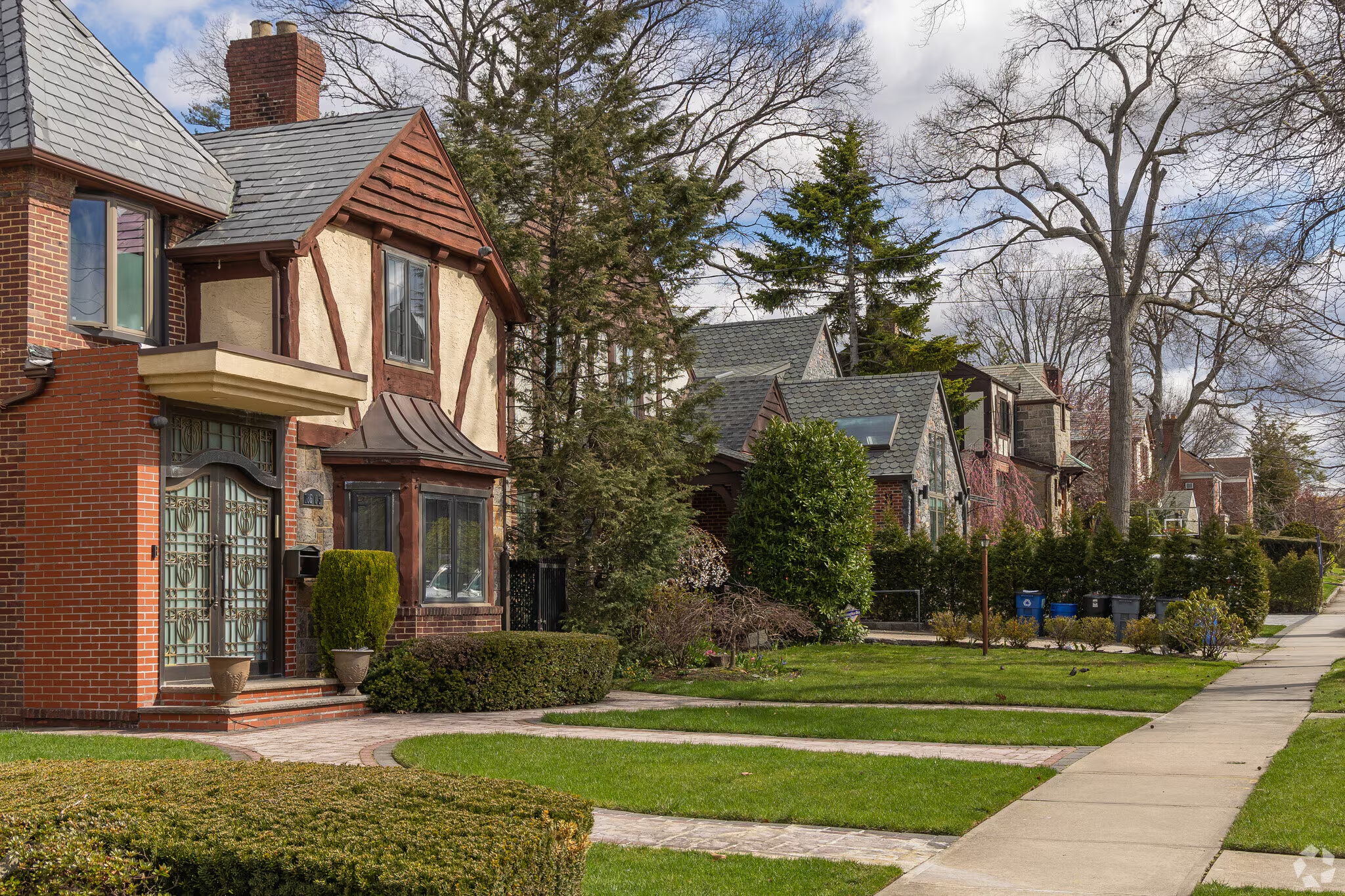
Situated on a high ridge in central Queens, Jamaica Hills is a serene and well-established neighborhood that offers a picturesque suburban retreat. Known for its quiet, tree-lined streets and elevated topography, it provides a high quality of life that appeals to both families and professionals seeking a tranquil escape without sacrificing urban convenience.
A Legacy of Land and Thoughtful Development
From Rural Farmland to a Residential Haven
Jamaica Hills sits on one of the highest points in Queens, a geographic feature that inspired its name and offers residents distinct views and a sense of natural beauty. Developed in the early 20th century, the neighborhood was intentionally designed with a "park-like" feel, prioritizing spacious lots and architectural consistency. This legacy is preserved today through the efforts of the Jamaica Hills Civic Association, which works to maintain the area’s low-density, residential character.
The Community: A Global Mosaic (2026 Stats)
Jamaica Hills is a tight-knit community where neighbors genuinely know one another. As of January 2026, the neighborhood stands as a true reflection of the borough’s multiculturalism.
Population: Approximately 63,730 residents (Zip Code 11432).
Demographics: The neighborhood is predominantly Asian (42.3%), followed by Black or African American (18.3%), Hispanic/Latino (16.1%), and White (13.9%).
Global Roots: Remarkably, over 71% of residents were born outside the U.S., making it one of the most culturally diverse enclaves in the country.
Economics: The median household income has grown to approximately $75,395, with an average household income reaching $105,490, reflecting a 4.7% year-over-year increase.
Real Estate in Jamaica Hills: 2026 Market Insights
As of early 2026, the market in Jamaica Hills is characterized as "Balanced," meaning supply and demand are roughly equal, providing a fair environment for both buyers and sellers.
Median Home Price: As of January 2026, the median home sale price has reached approximately $1,050,000. While this represents a high-end entry point for detached homes, it is influenced by the neighborhood's prestige and large lot sizes.
The "Co-op" Alternative: For those seeking a more accessible entry, the neighborhood offers a significant stock of co-op apartments, with median values for attached units sitting closer to $199,000 to $246,000.
Market Pace: Homes are currently finding buyers in a median of 50 to 75 days, a faster pace than last year as buyers seek out the area’s stability.
Rentals: The rental market is active, with a median rent of $2,462 per month, showing a 7% increase over the last 12 months.
Amenities and Connectivity: 2026 Updates
The "Campfire" Community & Green Spaces
Captain Tilly Park: This 9-acre oasis remains the neighborhood’s centerpiece.
Upcoming Event (Feb 16, 2026): Join the Urban Park Rangers for "Kids Week: Gather Around the Campfire" at Chapin Parkway and 85th Avenue. It’s a free event featuring tales of urban wildlife and a cozy campfire.
Campus Life: St. John’s University continues to anchor the northern border, providing a youthful energy and cultural events that benefit the local community.
Exceptional Accessibility & Major Infrastructure
Jamaica Hills is a premier "transit-rich" suburb:
The $50 Million "Reimagined Jamaica Station": In January 2026, Governor Kathy Hochul announced a major overhaul of the nearby Jamaica Station. This modernization will create a world-class transit hub with better flow between the LIRR, Subway, and AirTrain.
Subway: The F Train at the 179th Street Station remains the primary link to Manhattan (35–40 mins).
2026 Fare Update: As of January 4, 2026, the standard subway and local bus fare has increased to $3.00 via OMNY.
Driving: Strategically located near the Grand Central Parkway, residents can reach JFK Airport or Nassau County in under 15 minutes.
Jamaica Hills, Queens, offers a truly special opportunity to experience a classic, stable, and welcoming urban lifestyle. It's a place where elevated terrain and global cultures converge.
HOA: No (Neighborhood-wide)
55+ Community: No
Median Age: 39