Brownsville, Brooklyn, NY
The Enduring Heartbeat of Brownsville: Resilience, Community, and Renewal
Brownsville, Brooklyn, is a neighborhood defined by its deep history, unwavering resilience, and a profound sense of community. Situated in eastern Brooklyn, it's a place with a complex past, a vibrant present, and a promising future. Known for its strong Afro-Caribbean and African American identity, Brownsville appeals to those seeking an authentic urban experience with a powerful spirit of collective action.
A History Forged in Industry and Activism
From Jewish Enclave to Cultural Hub
Brownsville began in the late 19th century as a planned community for Jewish immigrants, quickly becoming a dense center of labor activism and commerce. By the 1950s, a demographic shift transformed the area into a primary destination for African Americans and Caribbean immigrants. Today, the neighborhood remains a global anchor for the Afro-Caribbean diaspora, particularly with residents of Haitian (6.2%) and Jamaican (9.9%) ancestry.
A Community of Resilience
Despite historic disinvestment, Brownsville has fostered one of the most active community-organizing networks in the country. Residents take immense pride in their "neighborhood of champions," producing world-class athletes and leaders while maintaining a deep-rooted system of mutual aid through local block associations and community gardens.
The Community: A Young and Growing Population
As of early 2026, Brownsville is characterized by its youthful energy and high household density.
Demographic Snapshot (2025/2026 Estimates):
Total Population: ~68,479 to 99,827 (depending on defined boundaries).
Median Age: ~24 – 30 years (Significantly lower than the Brooklyn average).
Ethnic Makeup:
Black or African American: ~61.8% – 68.4%
Hispanic or Latino: ~23.1% – 25.6%
White: ~1.1% – 7.7%
Poverty & Progress: While childhood poverty remains high at ~43%, the neighborhood is seeing a rise in executive and professional roles among the working population (~26.4%).
Real Estate: Classic Homes and 2026 Revitalization
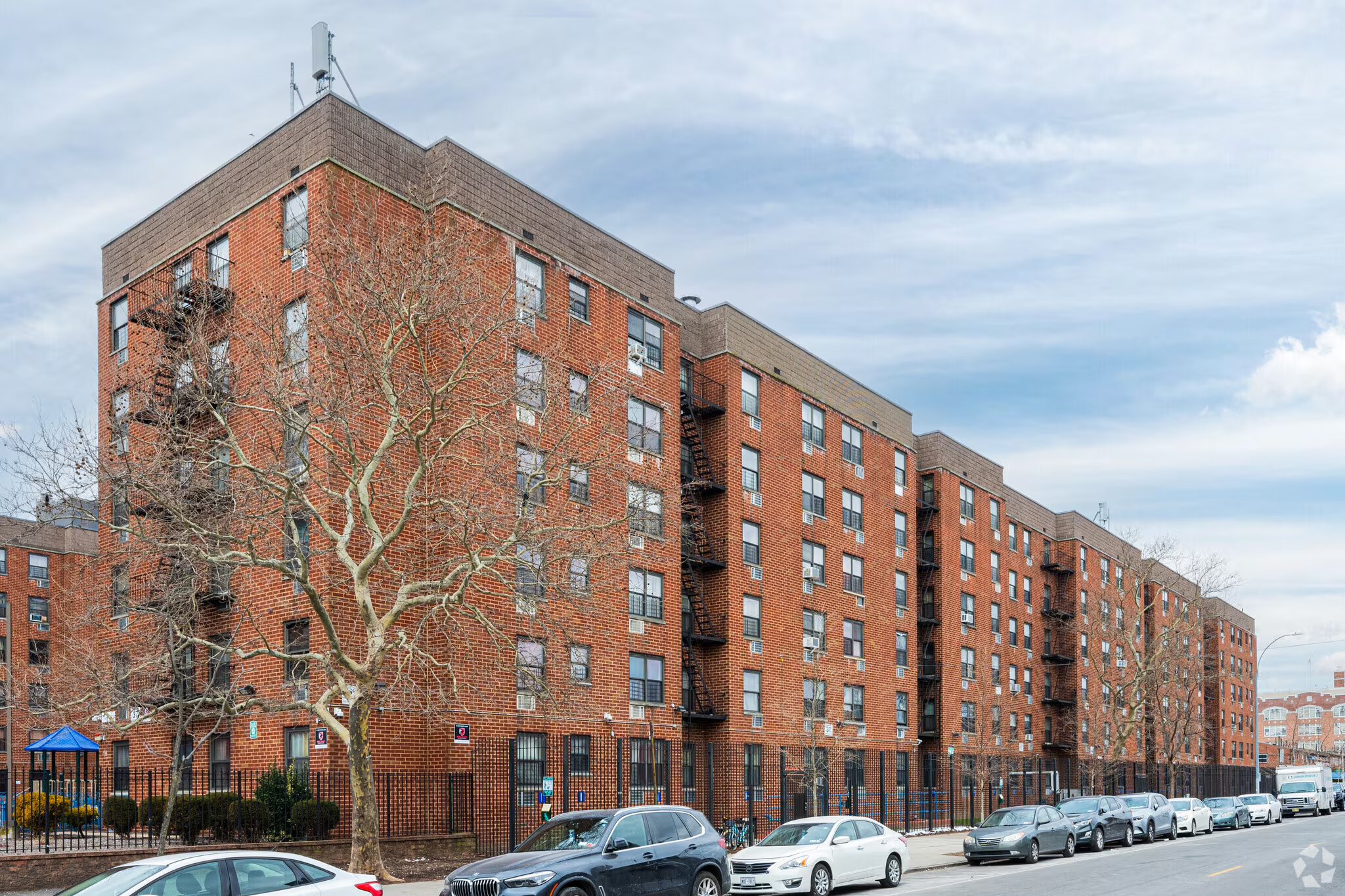
The real estate landscape is a mix of classic brick rowhouses and a massive wave of new, "deeply affordable" housing initiatives.
Market Snapshot (January 2026)
As of early 2026, the real estate market in Brownsville is experiencing a value-driven surge, as buyers priced out of Bed-Stuy and Bushwick look further east.
Typical Home Value: ~$636,977 (Zillow)
Median Listing Price: ~$865,000
Median Sale Price: ~$650,000
Median Monthly Rent: ~$2,800 – $2,880
Market Velocity: Properties are moving faster than in previous years, spending a median of 55 days on the market.
New Development: The Brownsville Arts Center & Apartments (BACA) is currently under construction. This $254 million project will bring 283 affordable homes and a 28,000-square-foot cultural arts center to the neighborhood by late 2027. You can browse current listings at Realtor.com: Brownsville.
Amenities and Connectivity: Local Hubs
Cultural and Culinary Anchors
Pitkin Avenue: The primary commercial corridor, bustling with local businesses, Afro-Caribbean eateries, and community services.
New for 2026: The Brownsville Hub for Innovation and Entrepreneurship is expanding its retail space to support local minority-owned startups.
Dining: Local residents enjoy authentic jerk chicken and oxtail at neighborhood staples, while the newer "City of Yes" initiatives are bringing more diverse healthy food options to the corridor.
Parks and Recreation
Betsy Head Park: A major local asset with a large public pool, sports fields, and a recently renovated playground.
Lincoln Terrace Park: Providing sprawling green space on the neighborhood's border.
Community Gardens: Brownsville is home to dozens of community-run gardens that serve as both green oases and local food sources.
Exceptional Transportation
Brownsville is one of the most transit-connected neighborhoods in the borough:
Subway: The 3 train and L train run through the heart of the neighborhood at stations like Rockaway Avenue and Livonia Avenue.
Broadway Junction: A major transit hub on the border, offering access to the A, C, J, Z, and L trains, plus the Long Island Rail Road (LIRR).
Bus Network: Numerous routes (B7, B12, B14, B15, B60) provide extensive local and crosstown connectivity.
Fast Facts
HOA: No (The vast majority of rowhouses are fee-simple. Only specific newer affordable housing condos have boards.)
55+ Community: No
Safety Note: As of January 2026, overall crime in NYC public housing is on a downward trend, with shooting incidents at historic lows citywide, including a 23% decline in early 2025.